Modern architecture is constantly evolving, and one of the most innovative construction solutions today is tensile structures. From stadiums and airports to walkways and commercial complexes, tensile systems are transforming the way we design functional and aesthetic spaces. At Tensile Factory Pvt. Ltd., we specialize in designing and manufacturing advanced tensile roofing systems that combine durability, flexibility, and visual appeal.
In this detailed guide, we will explain what is tensile structure, explore the types of tensile structures, understand how they work, and highlight their key benefits.
What is Tensile Structure?
A tensile structure is a construction system that uses tension rather than compression to support loads. Unlike traditional buildings that rely heavily on concrete or steel beams for support, tensile-structures use high-strength fabric membranes stretched tightly over a framework of steel cables or structural supports.
The fabric remains stable because it is continuously pulled (kept in tension), which makes the entire structure lightweight yet strong. This unique principle allows architects to create elegant curves, sweeping roofs, and open spaces without bulky support columns.
Today, tensile roofing solutions are widely used for commercial, industrial, and public infrastructure projects because of their modern look and practical performance.
How Tensile Structures Work
To understand how tensile structures work, it is important to know the concept of tension. In conventional buildings, gravity pushes down on beams and columns (compression). In contrast, tensile-structures distribute loads through tension. The fabric membrane is stretched tightly between anchor points, and the forces are evenly distributed across the surface.
A typical tensile roofing system includes:
- High-strength PVC or PTFE coated fabric
- Steel support structures
- Tension cables
- Anchoring systems
When wind, rain, or other loads act on the structure, the tensioned membrane transfers these forces to the supporting framework. This ensures stability while keeping the structure lightweight. Because of this engineering principle, tensile-structures can cover large areas without internal columns, making them ideal for stadiums, parking areas, and open public spaces.
Types of Tensile Structures
There are several types of tensile-structures, each designed for specific architectural and functional needs. Let’s explore the most common ones:
1. Conical Tensile Structures
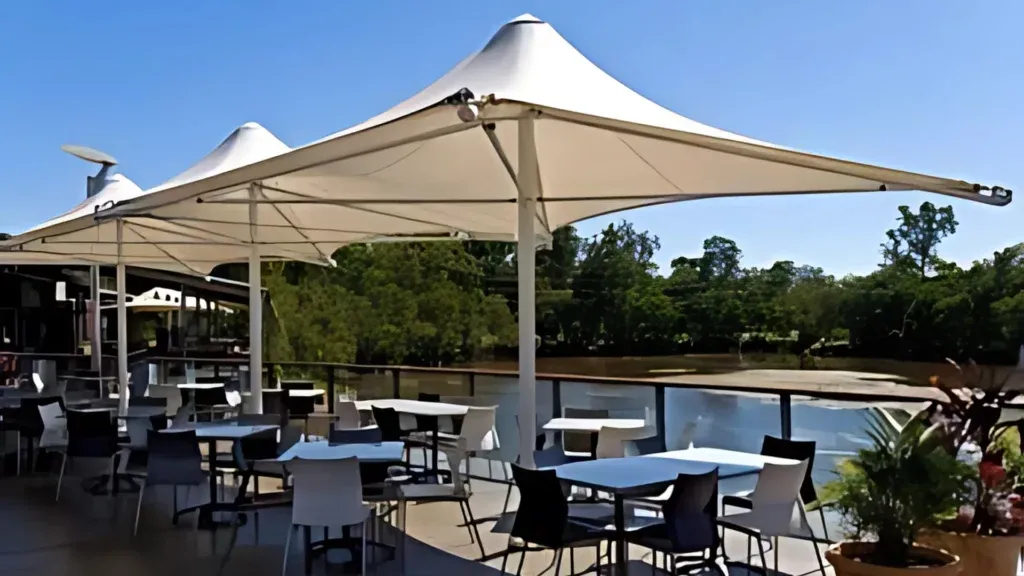
These are cone-shaped designs commonly used in entrance areas, gardens, and parking spaces. They offer excellent water drainage and a striking architectural appearance.
2. Hypar (Hyperbolic Paraboloid) Structures
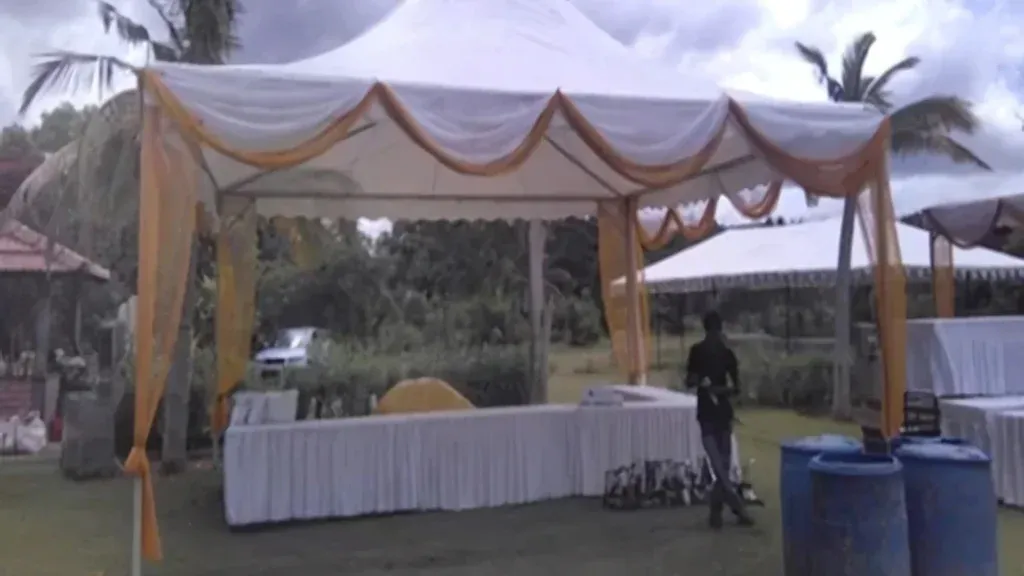
Hypar tensile-structures have a unique twisted shape that provides both strength and aesthetic appeal. They are widely used in commercial complexes and outdoor canopies.
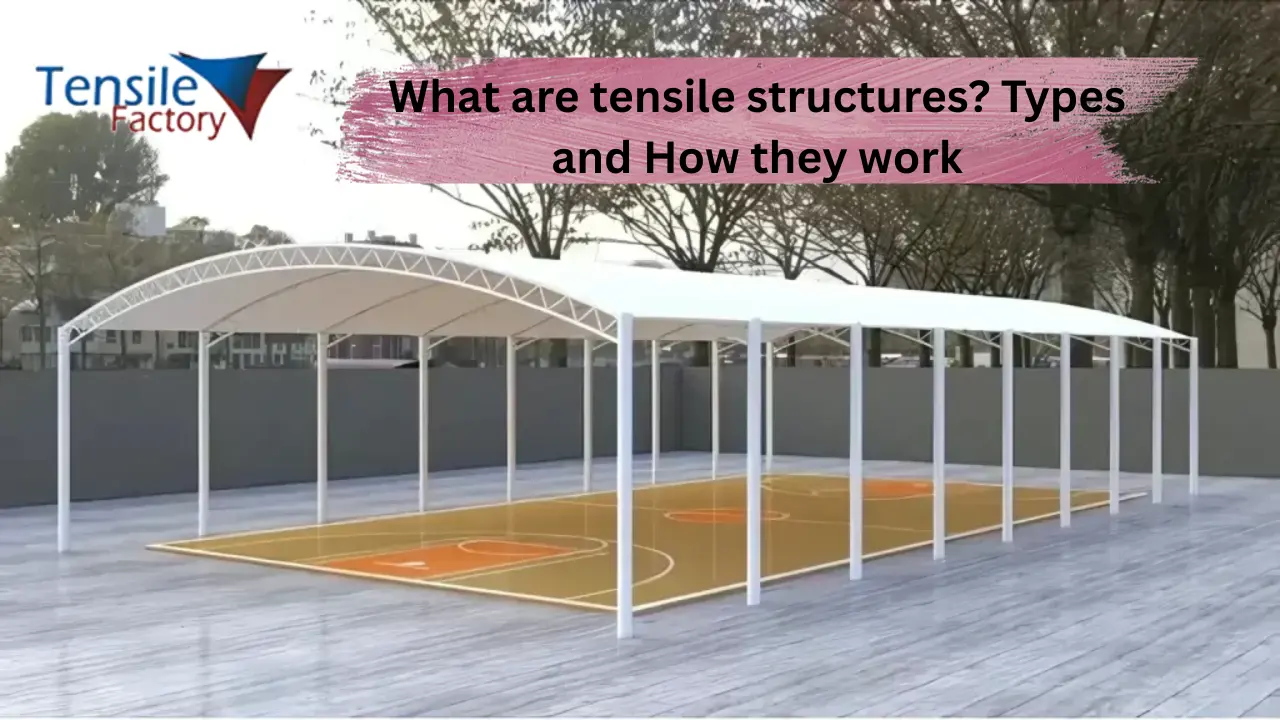
3. Arch-Supported Tensile Structures
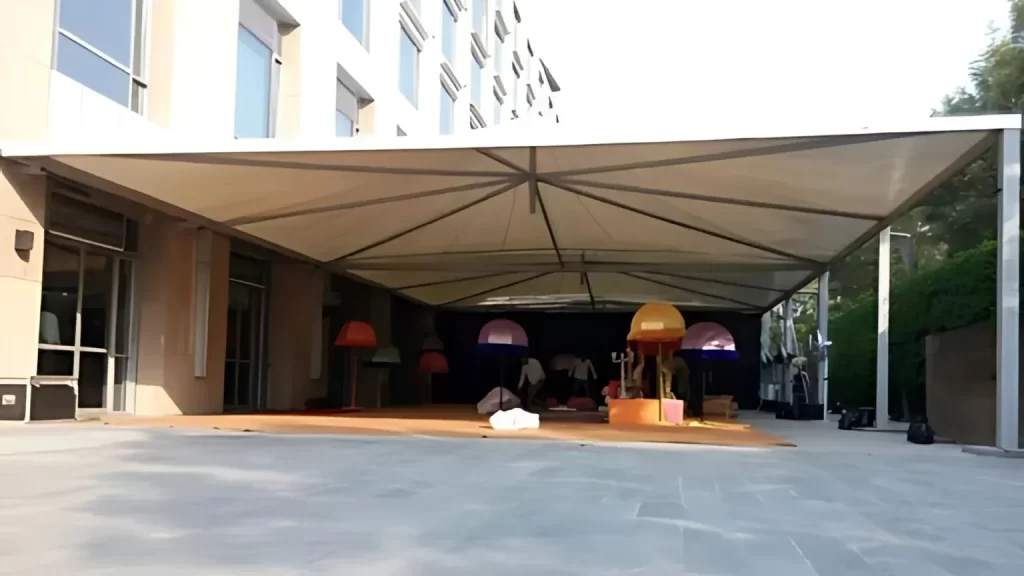
In this design, arches provide support to the membrane. These are often used in large-span areas such as sports arenas and warehouses.
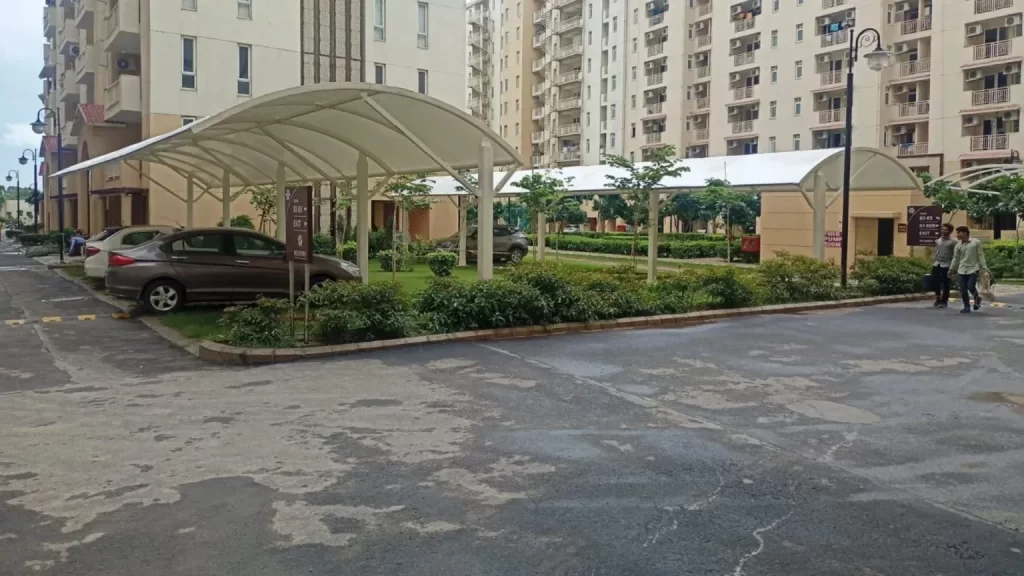
4. Barrel Vault Structures
Barrel vault tensile roofing is designed in a curved shape similar to a tunnel. These are ideal for walkways, corridors, and covered passages.
5. Cable Net Structures
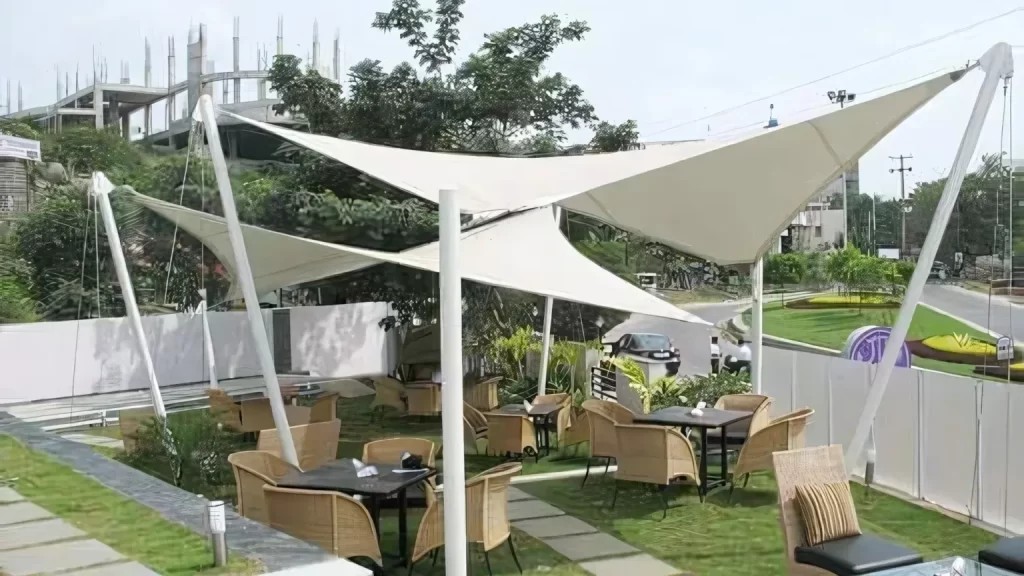
This type uses a network of cables to support the membrane. It is commonly seen in large stadiums and exhibition centers.
Each of these types of tensile structures offers unique advantages depending on the project’s size, purpose, and environmental conditions.
Applications of Tensile Roofing
Tensile roofing systems are extremely versatile. Some common applications include:
- Car parking sheds
- Auditorium covers
- Stadium roofing
- Swimming pool covers
- Walkway canopies
- Resorts and hotels
- Industrial warehouses
- Shopping malls
Because tensile structures are customizable, they can be designed to suit both small-scale projects and large infrastructure developments.
Benefits of Tensile Structures
The growing demand for tensile structures is driven by their multiple advantages. Here are the key benefits:
- Lightweight Yet Strong- One of the biggest advantages of tensile roofing is its lightweight design. Despite being light, the materials used are extremely strong and resistant to environmental conditions.
- Cost-Effective Solution- Compared to traditional construction, tensile structures often require less material and shorter installation time, reducing overall project costs.
- Modern and Attractive Design- Tensile structures offer sleek, contemporary designs. Their flowing curves and unique shapes enhance the aesthetic appeal of any property.
- Quick Installation- Because the components are prefabricated, tensile roofing systems can be installed much faster than conventional construction.
- Weather Resistance- High-quality membrane fabrics are UV-resistant, waterproof, and capable of withstanding strong winds and heavy rainfall.
- Low Maintenance- Tensile structures require minimal maintenance. The fabric used is treated to resist dust, dirt, and corrosion.
- Large Clear Span Areas- Since tensile systems do not require many internal supports, they can cover large areas without obstructing views or movement.
Why Tensile Structures Are Gaining Popularity
The construction industry is moving toward smarter, sustainable, and visually appealing solutions. Tensile structures meet all these demands. Their flexible design possibilities allow architects to experiment creatively while ensuring structural stability.
Additionally, tensile roofing solutions are environmentally friendly. The materials used are recyclable, and the lightweight structure reduces the carbon footprint compared to heavy concrete buildings.
Businesses also prefer tensile structures because they create open, comfortable spaces that enhance user experience while maintaining cost efficiency.
Material Used in Tensile Roofing
The quality of a tensile structure depends largely on the materials used. Common materials include:
- PVC-coated polyester fabric
- PTFE-coated fiberglass fabric
- HDPE fabric
- Mild steel or galvanized steel framework
These materials are selected based on the project requirements, climate conditions, and budget.
Choosing the Right Tensile Structure Manufacturer
When planning a tensile roofing project, selecting an experienced manufacturer is essential. The right company ensures:
- Proper structural design
- High-quality fabric materials
- Accurate load calculations
- Professional installation
- After-sales support
At Tensile Factory Pvt. Ltd., we focus on delivering innovative and durable tensile structures tailored to client requirements. Our team of experts carefully designs each project to ensure safety, performance, and visual excellence.
Future of Tensile Structures
With increasing demand for lightweight and flexible construction, the future of tensile structures looks promising. Urban spaces are becoming more compact, and the need for efficient roofing solutions is growing rapidly.
Tensile roofing is expected to play a major role in smart cities, eco-friendly architecture, and large public infrastructure projects. As technology advances, new membrane materials and structural techniques will further improve the performance and lifespan of tensile structures.
Conclusion
To summarize, what is tensile structure? It is a modern architectural solution that uses tensioned fabric membranes supported by steel frameworks to create lightweight, durable, and visually impressive spaces.
Understanding the types of tensile structures helps in choosing the right design for specific applications. Whether it is conical, hypar, arch-supported, or barrel vault, each system offers unique advantages.
From cost-effectiveness and quick installation to weather resistance and aesthetic appeal, tensile structures provide unmatched benefits. Their ability to deliver functional and attractive tensile roofing solutions makes them a preferred choice in today’s construction industry.
If you are planning a project that requires innovative roofing or shading solutions, tensile structures are a smart and future-ready investment.