Choosing the right roofing solution is one of the most important decisions for any construction project. Whether you’re building a commercial complex, industrial facility, sports arena, warehouse, shopping mall, resort, or public infrastructure, the roof significantly impacts durability, aesthetics, maintenance costs, and long-term performance.
For decades, conventional roofing systems made from concrete, steel, and metal sheets have been the standard choice for buildings. However, modern architecture is rapidly shifting towards innovative and lightweight solutions like Tensile Structure systems. Their unique design, flexibility, and cost-effectiveness have made them increasingly popular across various industries.
But which roofing solution is better for your project? Should you choose a traditional roof or invest in a modern tensile structure? In this comprehensive guide, we’ll compare Tensile Structure vs Conventional Roofing, highlighting their features, advantages, limitations, applications, and helping you determine which option best suits your project requirements.
What is a Tensile Structure?
A Tensile Structure is an architectural roofing system that uses high-strength fabric membranes supported by steel frameworks and tension cables. Unlike traditional roofs that depend on heavy structural members, tensile structures distribute loads through tension, resulting in lightweight yet extremely durable roofing solutions.
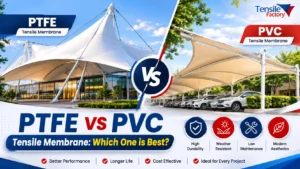
Modern tensile structures are manufactured using premium-quality PVC, PTFE, or ETFE membranes that offer excellent weather resistance, UV protection, corrosion resistance, and long service life.
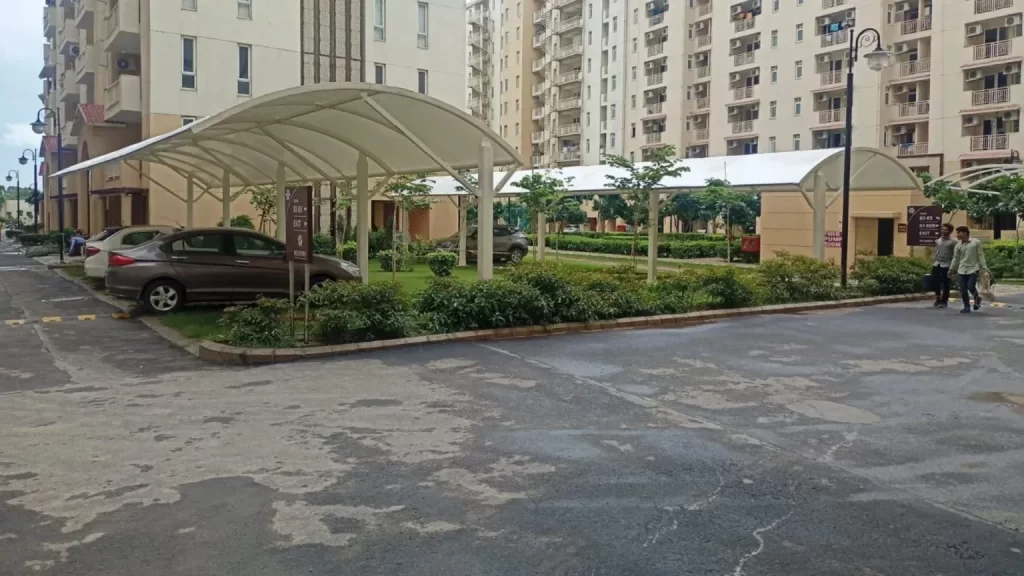
Today, tensile structures are widely used for car parking sheds, airports, stadiums, shopping malls, schools, hospitals, hotels, resorts, walkways, entrance canopies, swimming pools, exhibition centers, and industrial facilities because they combine functionality with outstanding visual appeal.
Also Read: 10 Advantages of Tensile Canopy Structures In 2026
What is Conventional Roofing?
Conventional roofing refers to traditional roof construction methods that use reinforced concrete, steel beams, trusses, metal sheets, tiles, or other rigid materials to create permanent roofing systems. A conventional roof system has been widely used in residential, commercial, and industrial buildings for decades because of its structural strength and familiarity in construction practices.
Two common examples include the conventional flat roof, which is commonly used in commercial and industrial buildings, and the conventional framed roof, which consists of steel or wooden framing supporting roof sheets or tiles. While conventional roofing remains a reliable solution for many projects, modern architectural requirements have created demand for lighter, more flexible alternatives.
Tensile Structure vs Conventional Roofing
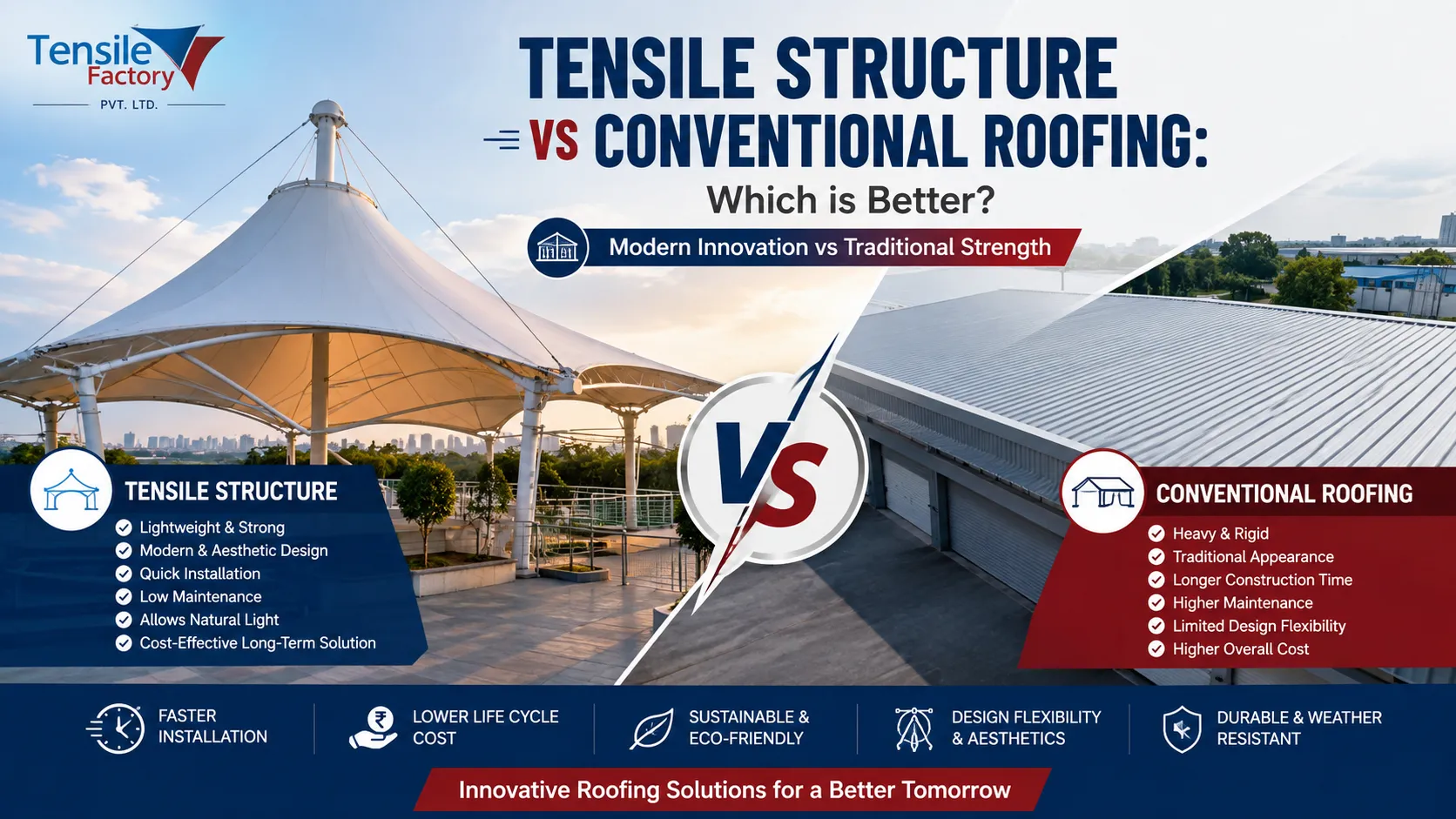
Although both roofing systems protect buildings from weather conditions, they differ significantly in terms of design, construction, cost, maintenance, and aesthetics.
1. Design Flexibility
One of the biggest advantages of a Tensile Structure is its design freedom. Tensile membranes can be shaped into elegant curves, domes, cones, arches, and customized architectural forms that are almost impossible to achieve using conventional roofing materials.
In contrast, conventional roofing generally follows fixed geometric shapes due to structural limitations. While practical, these roofs often lack the visual impact offered by tensile architecture. For businesses wanting to create iconic landmarks or premium commercial spaces, tensile structures provide a clear advantage.
2. Weight and Structural Load
A Tensile Structure is significantly lighter than a conventional roof system. Since the roofing membrane weighs only a fraction of concrete or metal roofs, the supporting structure requires less steel and fewer foundation requirements.
Conversely, a conventional flat roof or reinforced concrete roof adds considerable dead load to the building, increasing structural costs and construction complexity. The lightweight nature of tensile structures also makes them suitable for retrofitting existing buildings without major structural modifications.
3. Construction Speed
Project completion time plays an important role in commercial construction. A tensile structure is manufactured largely off-site, with steel components and membrane panels fabricated in advance. This allows faster installation once materials reach the project location.
On the other hand, conventional roofing often involves extensive on-site work, including shuttering, reinforcement, concrete casting, curing, waterproofing, and finishing, which considerably increases project duration. For projects with tight deadlines, tensile structures provide a much faster solution.
4. Cost Effectiveness
Although project costs vary depending on design and materials, tensile structures often offer better value for large-span applications. Because tensile systems require lighter steel frameworks and faster installation, labor and construction expenses are generally reduced.
A conventional framed roof may involve higher material consumption, increased structural steel, longer construction periods, and greater maintenance costs over time. Businesses seeking long-term operational savings often prefer tensile structures for commercial and public infrastructure projects.
5. Durability and Weather Resistance
Modern tensile membranes are designed to withstand harsh environmental conditions, including intense sunlight, heavy rainfall, strong winds, and temperature fluctuations. Premium PVC and PTFE-coated fabrics resist corrosion, fungal growth, UV degradation, and moisture, ensuring long service life with minimal maintenance.
Traditional roofing materials are also durable but may require periodic waterproofing, painting, corrosion treatment, or repairs, especially in coastal or industrial environments. Properly engineered tensile structures can deliver decades of reliable performance with routine inspections and basic maintenance.
6. Maintenance Requirements
Maintenance is another important factor when comparing roofing systems. A Tensile Structure requires relatively little maintenance. Most modern membranes feature self-cleaning properties that help reduce dirt accumulation during rainfall. Periodic inspections and occasional cleaning are generally sufficient to maintain performance and appearance.
In comparison, conventional roofing often demands regular waterproofing, repainting, crack repairs, corrosion protection, and leak rectification, particularly as the structure ages. Lower maintenance requirements translate into reduced lifecycle costs for tensile roofing systems.
7. Natural Lighting and Energy Efficiency
One of the most attractive features of tensile structures is their ability to transmit natural daylight. Many tensile membranes allow diffused sunlight to enter the covered area, reducing the need for artificial lighting during daytime and lowering electricity consumption.
A conventional roof system, particularly a reinforced concrete roof, blocks natural light unless skylights are incorporated, increasing dependency on electrical lighting. This makes tensile structures an environmentally friendly solution that supports sustainable building practices.
Applications of Tensile Structures
The versatility of tensile architecture makes it suitable for a wide range of commercial and industrial applications.
Some common applications include:
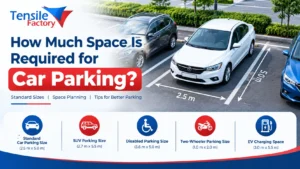
- Car Parking Sheds
- Walkway Canopies
- Entrance Canopies
- Swimming Pool Covers
- Shopping Malls
- Airports
- Railway Stations
- Sports Stadiums
- Schools and Colleges
- Hotels and Resorts
- Exhibition Centers
- Industrial Warehouses
- Commercial Complexes
- Public Spaces
Their elegant appearance and functional benefits make tensile structures a preferred choice for modern infrastructure.
When Should You Choose Conventional Roofing?
Despite the advantages of tensile structures, conventional roofing remains suitable for certain projects. A conventional flat roof is often preferred for multi-storey buildings where the roof serves as a usable terrace or equipment platform.
Similarly, a conventional framed roof may be more appropriate for enclosed industrial buildings requiring insulation, heavy roof-mounted equipment, or specialized structural requirements. The final choice depends on project objectives, architectural design, operational needs, and budget.
Why Choose Tensile Factory Pvt. Ltd.?
At Tensile Factory Pvt. Ltd., we specialize in designing, manufacturing, and installing premium-quality Tensile Structure solutions for commercial, industrial, institutional, and public infrastructure projects across India.
Our expertise includes car parking tensile structures, entrance canopies, walkway covers, swimming pool shades, gazebos, stadium roofing, and customized architectural membrane structures.
Every project is engineered using high-grade PVC/PTFE membranes, precision-fabricated steel structures, and advanced design software to ensure durability, safety, and exceptional aesthetics.
From concept development and structural analysis to fabrication, installation, and after-sales support, our experienced professionals deliver complete turnkey solutions tailored to your specific project requirements.
Conclusion
The comparison between Tensile Structure vs Conventional Roofing ultimately depends on the purpose of your project. While conventional roofing continues to be a dependable choice for many buildings, modern tensile structures offer unmatched advantages in terms of aesthetics, lightweight construction, faster installation, energy efficiency, and lower maintenance.
For commercial spaces, public infrastructure, recreational facilities, and large-span architectural projects, a Tensile Structure provides a modern, durable, and cost-effective roofing solution that enhances both functionality and visual appeal.
If you’re planning your next roofing project, partnering with Tensile Factory Pvt. Ltd. ensures you receive customized tensile structure solutions that combine innovative engineering, premium materials, and long-lasting performance.
Frequently Asked Questions (FAQs)
1. What is the main difference between a Tensile Structure and conventional roofing?
A Tensile Structure uses high-strength fabric membranes under tension, while conventional roofing uses rigid materials such as concrete, steel, or metal sheets for structural support.
2. Is a Tensile Structure durable?
Yes. High-quality tensile structures made with PVC or PTFE-coated membranes are designed to withstand harsh weather conditions and provide a long service life with minimal maintenance.
3. Where are tensile structures commonly used?
They are widely used for car parking sheds, walkways, shopping malls, airports, stadiums, hotels, swimming pools, schools, hospitals, and commercial buildings.
4. Is a conventional flat roof better than a tensile structure?
A conventional flat roof is suitable where roof access or heavy rooftop equipment is required, while tensile structures are ideal for lightweight, aesthetically appealing, and large-span roofing applications.
5. Why choose Tensile Factory Pvt. Ltd.?
Tensile Factory Pvt. Ltd. offers customized tensile structure solutions with innovative designs, premium materials, expert engineering, professional installation, and reliable after-sales support for projects across India.