Modern architecture increasingly focuses on creating spaces that are comfortable, functional, and adaptable to changing weather conditions. Traditional fixed roofs provide permanent coverage, but they do not offer much flexibility when people want sunlight, fresh air, or an open outdoor environment. This is where motorized roof systems provide a practical solution.
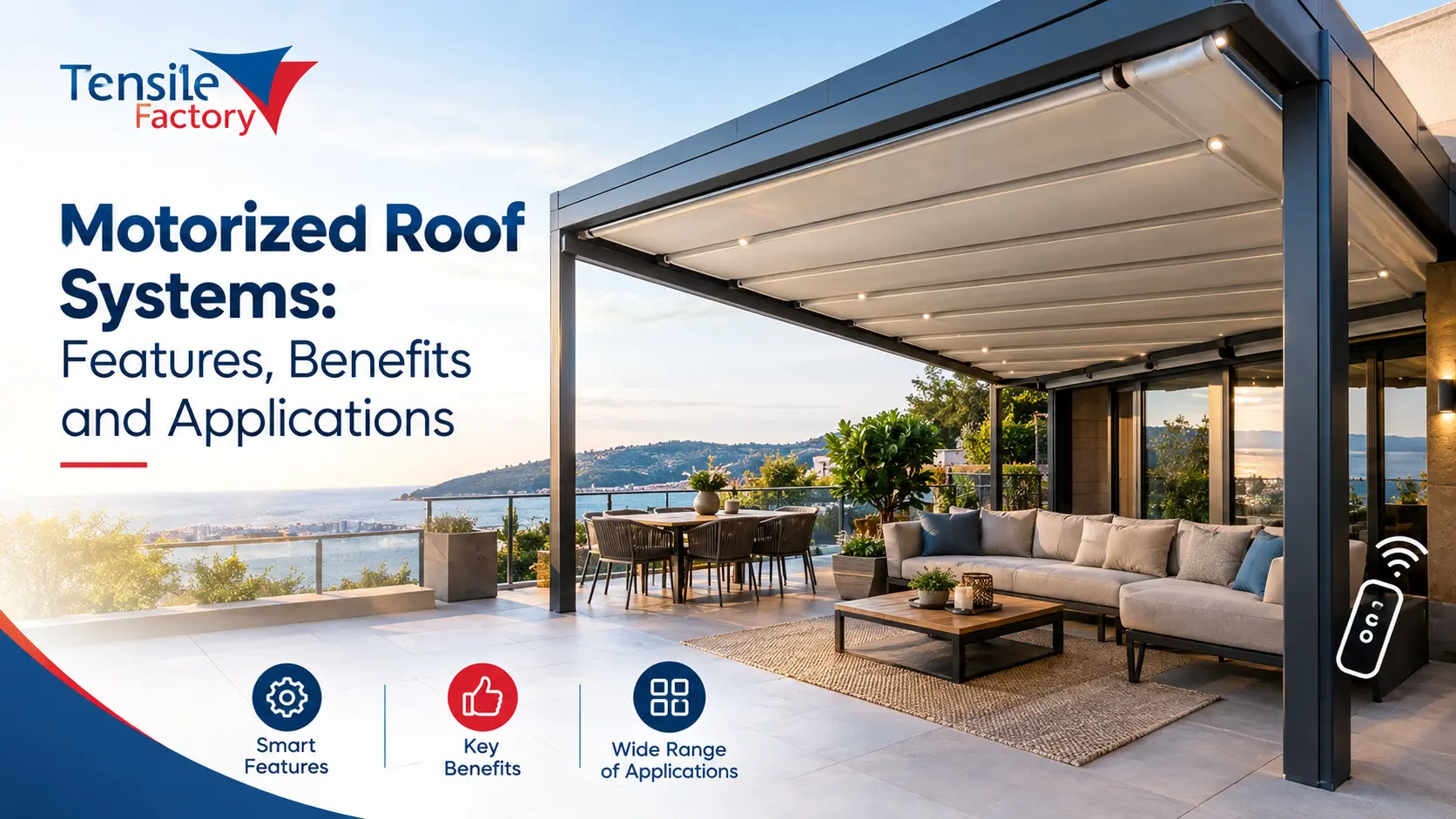
Motorized roofs are designed to open and close with the help of an electric motor and a controlled operating mechanism. They allow users to adjust the roof according to weather conditions, personal preferences, and the requirements of a particular space. These systems are suitable for residential terraces, restaurants, hotels, resorts, swimming pools, commercial buildings, and various outdoor areas.
Whether you want to improve an outdoor dining space or create a flexible covered terrace, a motorized roof system can enhance the usability and appearance of your property.
What Is a Motorized Roof System?
A motorized roof system is an automated roofing solution that allows a roof covering to move between open and closed positions. It generally operates through an electric motor, a mechanical framework, and a control system that manages the movement of the roof.
Depending on the design, the roof may retract, slide, fold, or adjust its position. Some systems use specialized fabric membranes, while others incorporate panels or other roofing materials.
Unlike conventional roofing, motorized roofs provide greater control over sunlight, ventilation, and outdoor exposure. Users can operate the system using a remote control, wall-mounted switch, or compatible automation system, depending on the installation.
These roofs are especially useful in spaces where people want the protection of a covered area without permanently losing the benefits of an open environment.
Key Features of Motorized Roof Systems
Motorized roofing combines modern engineering with convenient operation. The following features make these systems suitable for different residential and commercial applications.
1. Automated Opening and Closing
One of the main features of a motorized roof is its automated operation. An electric motor moves the roof according to the user’s requirements, reducing the need for manual handling. This makes daily operation more convenient, particularly for large terraces and commercial outdoor spaces.
2. Flexible Roof Design
Motorized roofs are available in different configurations, including retractable, sliding, folding, and adjustable designs. The structure can be selected according to the available space, architectural style, and intended application.
3. Durable Structural Framework
The supporting framework is designed to handle the loads associated with the roofing system and its intended operating conditions. Depending on the design, manufacturers may use steel, aluminium, or other suitable structural materials.
4. Convenient Control Options
Depending on the system, users can operate a motorized roof through a remote control, electrical switch, or integrated building automation controls. More advanced installations may include sensors that respond to specified environmental conditions.
5. Weather-Appropriate Roofing Materials
Motorized roofs can incorporate suitable fabric membranes, panels, and other roofing materials. The selection depends on factors such as sunlight exposure, rainfall, wind conditions, and the requirements of the installation.
6. Modern Architectural Appearance
These roofing systems offer a contemporary appearance that complements modern buildings. Their design can be customized to match the surrounding architecture, making them suitable for both residential properties and commercial establishments.
Benefits of Installing Motorized Roof Systems
Choosing a motorized roof can improve the functionality of an outdoor area while offering greater control over its environment.
1. Better Control Over Sunlight
Direct sunlight can make outdoor spaces uncomfortable during hot weather. A motorized roof allows users to adjust the roof position according to their needs. It can provide shade when required and open up the area when natural sunlight is preferred.
This flexibility is particularly beneficial for terraces, restaurants, cafés, and recreational spaces.
2. Improved Outdoor Comfort
Outdoor areas are often underused because of changing weather conditions. A suitable motorized roof helps create a more comfortable environment by providing adjustable coverage. When combined with appropriate ventilation and other design features, it can make outdoor spaces more enjoyable.
3. Convenient Operation
Manual roofing systems may require considerable effort to operate, particularly when covering large areas. Motorized systems simplify this process through electrically powered movement.
Users can adjust the roof with minimal effort, making the system suitable for locations where the roof needs to be opened or closed frequently.
4. Better Space Utilization
A motorized roof can transform an open area into a flexible space for different activities. For example, a restaurant terrace can remain covered during sunny conditions and open when guests prefer an outdoor dining experience.
Similarly, homeowners can use their terraces for relaxation, family gatherings, and social events under different conditions.
5. Enhanced Property Appearance
A well-designed motorized roof can complement contemporary architecture and improve the overall appearance of a property. Its clean lines, customized framework, and adjustable roofing arrangement can create a distinctive outdoor environment.
For hotels, resorts, and commercial establishments, this can also contribute to a more attractive customer experience.
6. Potential Energy Management Benefits
Motorized roofs can help manage solar exposure by allowing users to adjust the amount of direct sunlight entering a covered or adjoining space. When designed appropriately, this may reduce unwanted solar heat gain in certain conditions.
However, actual energy savings depend on the building design, roof materials, climate, and how the system is operated.
7. Customization for Different Projects
Motorized roofing solutions can be planned according to the dimensions and functional requirements of a space. Factors such as the opening mechanism, structural materials, roof covering, control options, and drainage arrangement can be considered during the design process.
This flexibility allows the system to suit a wide range of architectural projects.
Applications of Motorized Roof Systems
Motorized roofs are suitable for various locations where adjustable coverage can improve comfort and functionality.
1. Restaurants and Outdoor Cafés
Restaurants and cafés often use outdoor seating to create a pleasant dining atmosphere. A motorized roof allows businesses to adjust the covered area according to sunlight and suitable weather conditions. This can help make outdoor seating more versatile for customers.
2. Hotels and Resorts
Hotels and resorts can install motorized roofs over dining terraces, poolside lounges, event areas, and recreational spaces. These systems help create adaptable environments for guests while complementing the property’s architectural design.
3. Residential Terraces and Patios
Homeowners can use motorized roof systems to improve the usability of terraces, balconies, patios, and garden seating areas. Adjustable coverage provides greater flexibility for relaxation, family gatherings, and everyday outdoor activities.
4. Swimming Pool Areas
Swimming pool surroundings often require a balance between sunlight and shade. A motorized roof can provide adjustable coverage over suitable poolside seating or designated covered areas. The system must be designed with appropriate materials, drainage, and safety measures for the installation environment.
5. Commercial Buildings
Commercial properties can use motorized roofs for outdoor waiting areas, cafeterias, courtyards, and designated gathering spaces. Their flexible operation helps businesses adapt these areas to different activities and weather conditions.
6. Event Venues and Banquet Spaces
Outdoor event venues may need flexible roofing for gatherings, receptions, and private functions. A motorized roof can provide adjustable coverage for suitable spaces, although event use requires careful consideration of occupancy, wind loads, rain protection, and applicable safety requirements.
7. Clubs and Recreational Facilities
Clubs, lounges, and recreational facilities can benefit from adjustable roofing over outdoor seating, relaxation zones, and selected activity areas. The system helps make these spaces more versatile without relying entirely on permanent roof coverage.
How to Choose the Right Motorized Roof System
Selecting the right motorized roof requires more than comparing designs. The system should match the property’s structural conditions, intended use, and local weather requirements.
Consider the following factors before making a decision:
- Purpose of installation: Identify whether the roof is intended for a residential terrace, restaurant, swimming pool, or commercial outdoor area.
- Available space: Measure the installation area and determine the required opening and closing range.
- Structural strength: Ensure that the supporting framework is designed for the relevant loads and site conditions.
- Roofing material: Choose materials according to durability, sunlight exposure, rain protection, and maintenance requirements.
- Motor and control system: Consider operating convenience, motor capacity, control options, and access for servicing.
- Weather resistance: Evaluate wind loads, rainfall intensity, drainage, and other local environmental conditions.
- Installation and maintenance: Select a suitable design that allows safe installation, routine inspection, and access to mechanical components.
Consulting an experienced roofing professional can help you determine which configuration is appropriate for your project.
Motorized Roof Systems vs Traditional Fixed Roofs
Traditional roofs provide permanent coverage and are often suitable where a fixed protective structure is the main requirement. Motorized roof systems, on the other hand, allow users to adjust the roof position according to their needs.
Fixed roofs generally have simpler operating mechanisms because they do not need to move. Motorized roofs involve additional components, including motors, moving parts, controls, and maintenance requirements. However, they offer greater flexibility for spaces where adjustable shade and an open-air experience are important.
The right option depends on your budget, intended application, structural requirements, and preference for flexibility.
Why Choose a Professional Motorized Roof Manufacturer?
A motorized roof system needs proper planning, suitable materials, and precise installation to operate safely and reliably. Working with an experienced manufacturer or installer helps ensure that the design considers the dimensions of the site, structural support, movement mechanism, drainage, and local weather conditions.
Before finalizing a supplier, review the proposed design, material specifications, motor details, installation scope, warranty terms, and after-sales support. It is also useful to understand the maintenance schedule and availability of replacement components.
A professionally designed system can provide convenient operation while helping maintain performance over its intended service life.
Conclusion
Motorized roof systems offer a modern approach to creating flexible outdoor spaces. With automated operation, adjustable coverage, customizable designs, and convenient controls, they can improve the usability of terraces, restaurants, hotels, resorts, swimming pool areas, and commercial properties.
The key to choosing a suitable solution is to consider the project’s purpose, structural requirements, roofing materials, operating mechanism, and local weather conditions. With proper design and installation, a motorized roof can provide a practical balance between shade, ventilation, and open-air comfort.
If you are planning to upgrade an outdoor area, explore the available motorized roof structure solutions to find a design that suits your space, functional needs, and architectural preferences.