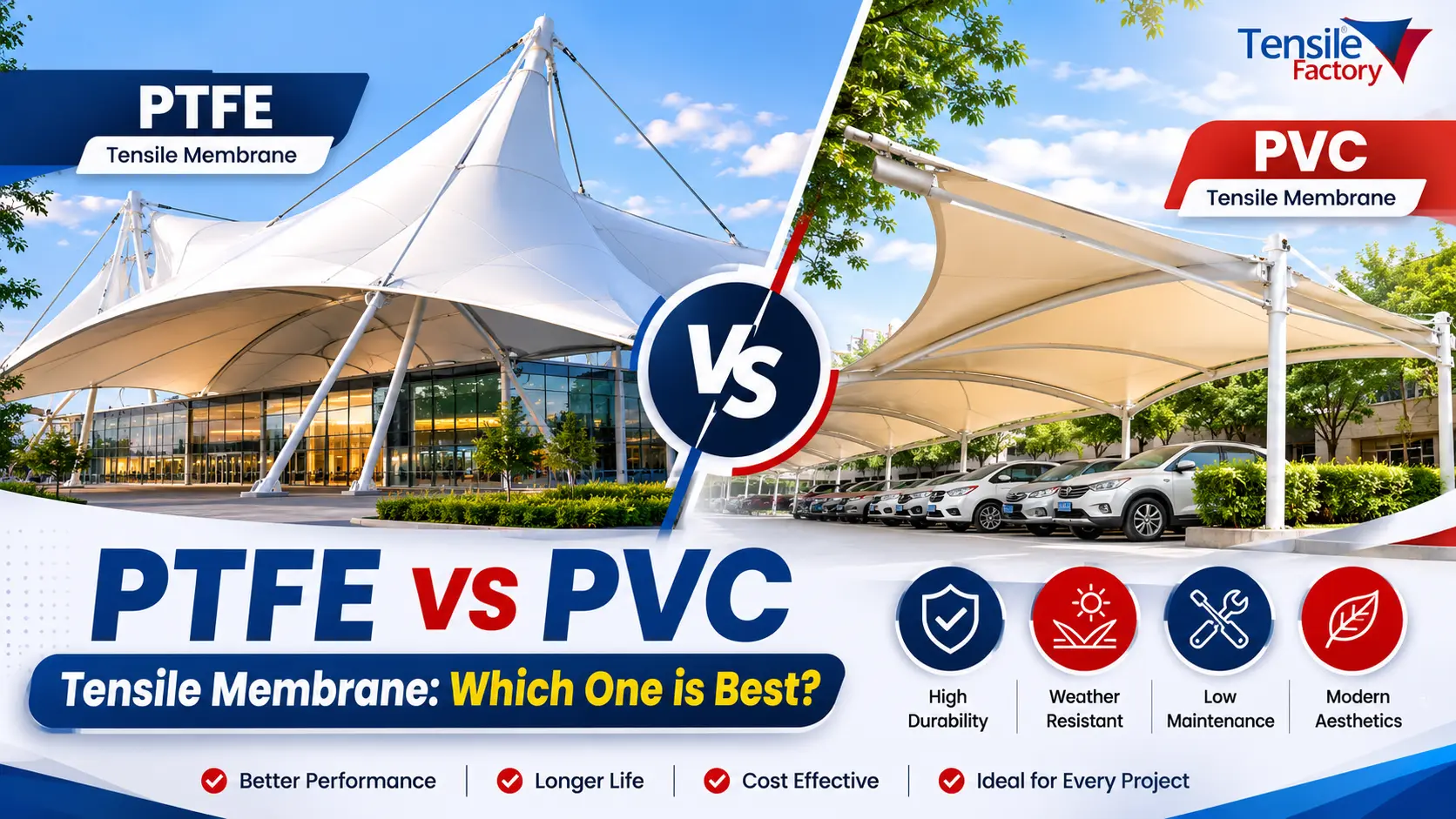
Tensile membrane structures have become one of the most preferred architectural solutions for modern commercial, industrial, and recreational spaces. From car parking sheds and walkways to stadiums, airports, resorts, and shopping malls, tensile membranes offer an attractive combination of durability, flexibility, and contemporary design. However, one common question many buyers ask before investing in a tensile structure is: PTFE vs PVC Tensile Membrane: Which One is Best?
Both PTFE (Polytetrafluoroethylene) and PVC (Polyvinyl Chloride) membranes are widely used in tensile architecture, but each material has unique properties and is suitable for different applications. Choosing the right membrane depends on your project requirements, budget, expected lifespan, maintenance preferences, and environmental conditions.
In this guide, we’ll compare PTFE and PVC tensile membranes in detail to help you make an informed decision.
Understanding Tensile Membrane Fabrics
A tensile membrane is a specially engineered fabric stretched over a structural framework to create lightweight yet highly durable roofing systems. These membranes provide shade, weather protection, and an elegant architectural appearance while allowing designers to create unique and visually appealing structures.
Modern tensile membranes are designed to withstand wind, rain, UV radiation, and temperature variations while requiring minimal structural support compared to conventional roofing materials.
The two most commonly used membrane materials are:
- PVC Tensile Membrane
- PTFE Tensile Membrane
Although both serve the same purpose, their performance, lifespan, and cost vary significantly.
Also Read: Car Parking Shed Maintenance Tips For Long-Lasting Durability
What is a PVC Tensile Membrane?
PVC (Polyvinyl Chloride) tensile membrane consists of a polyester fabric coated with PVC and protected by a special surface lacquer. It is one of the most widely used membrane materials because it offers an excellent balance between affordability, durability, and aesthetics.
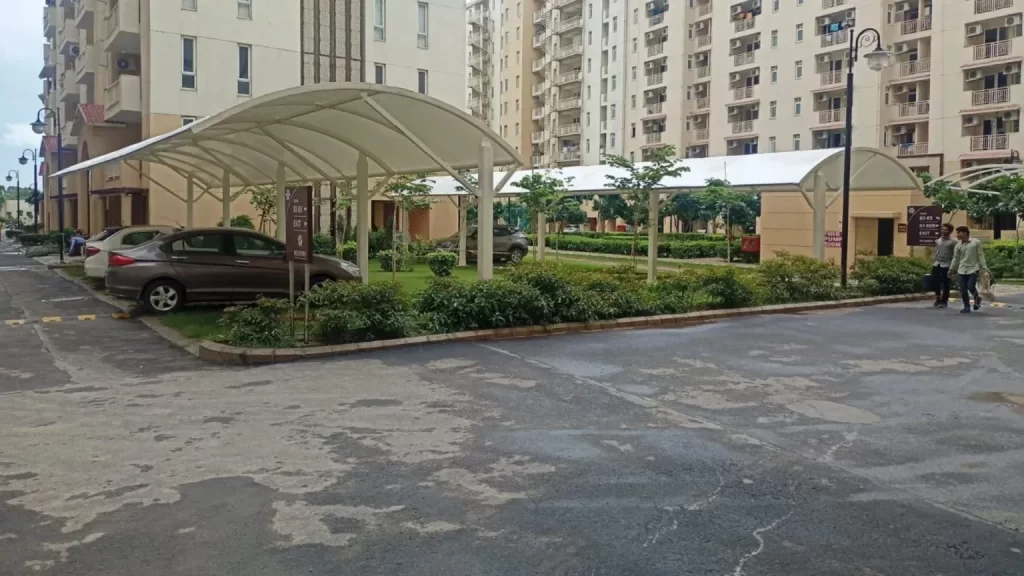
PVC membranes are commonly installed in:
- Car parking sheds
- Walkway canopies
- School campuses
- Hotels
- Restaurants
- Cafés
- Swimming pool covers
- Residential gazebos
- Commercial entrances
- Outdoor seating areas
Its versatility makes it suitable for both small and medium-sized projects.
What is a PTFE Tensile Membrane?
PTFE (Polytetrafluoroethylene) membrane is manufactured by coating woven fiberglass fabric with PTFE. It is considered one of the highest-performance tensile membrane materials available today.
PTFE membranes are primarily used in large-scale projects such as:
- Stadium roofs
- Airports
- Railway stations
- Convention centres
- Exhibition halls
- Sports complexes
- Industrial buildings
- Premium commercial structures
PTFE offers exceptional durability, high tensile strength, and superior weather resistance, making it ideal for projects requiring long service life.
PTFE vs PVC Tensile Membrane: Key Differences
1. Durability
PVC membranes generally provide a service life of around 15–20 years with proper maintenance. They perform well under normal environmental conditions and are suitable for most commercial and residential projects.
PTFE membranes, on the other hand, can last 30 years or more. Their fiberglass base fabric provides exceptional structural stability, making them ideal for permanent architectural installations.
Winner: PTFE
2. Weather Resistance
Both materials offer good resistance against sunlight, rain, and wind. However, PTFE performs significantly better in extreme weather conditions, including heavy snowfall, intense UV exposure, coastal environments, and high temperatures. PVC is highly weather-resistant but may gradually lose surface appearance after many years of continuous exposure.
Winner: PTFE
3. Appearance
PVC membranes are available in multiple colours and provide an attractive finish suitable for commercial and residential projects. PTFE membranes usually have a bright white finish that remains clean for many years due to its self-cleaning properties. If aesthetic flexibility is important, PVC offers more colour options. If long-term appearance matters most, PTFE is an excellent choice.
4. Maintenance
PVC membranes require periodic cleaning to remove dust and environmental deposits. PTFE membranes feature a non-stick surface that naturally resists dirt accumulation, allowing rainwater to wash away most contaminants. As a result, PTFE structures require significantly less maintenance over their lifespan.
Winner: PTFE
5. Cost
One of the biggest differences between these materials is price. PVC tensile membranes are considerably more affordable and therefore preferred for projects with limited budgets. PTFE membranes involve a higher initial investment because of their premium materials and longer lifespan. Although PTFE costs more initially, it may offer better long-term value due to lower maintenance and longer durability.
Winner: PVC (for affordability)
6. Flexibility
PVC membranes are highly flexible and easier to fabricate into different architectural shapes. They are suitable for curved roofs, canopies, gazebos, entrance structures, and decorative designs. PTFE membranes are also flexible but are generally chosen for large-span engineering projects requiring greater structural performance.
Comparison Table
| Feature | PVC Membrane | PTFE Membrane |
|---|---|---|
| Lifespan | 15–20 Years | 30+ Years |
| Initial Cost | Lower | Higher |
| Maintenance | Moderate | Very Low |
| UV Resistance | Excellent | Outstanding |
| Weather Resistance | Very Good | Excellent |
| Colour Options | Multiple | Limited (Mostly White) |
| Self-Cleaning | Limited | Excellent |
| Best For | Commercial & Residential Projects | Large Public Infrastructure |
Which Membrane is Better for Different Applications?
Choose PVC If:
- You have a limited budget.
- Your project is residential or commercial.
- You require multiple colour options.
- You need quick installation.
- You want an economical tensile roofing solution.
PVC membranes are ideal for:
- Car parking tensile structures
- Gazebos
- Walkway covers
- Swimming pool shades
- School canopies
- Restaurant outdoor seating
- Residential terraces
Choose PTFE If:
- Your project demands maximum durability.
- The structure is expected to last several decades.
- Maintenance needs to be minimal.
- The project involves large-span architecture.
- Premium quality is the top priority.
PTFE membranes are ideal for:
- Stadiums
- Airports
- Metro stations
- Exhibition centres
- Industrial facilities
- Convention halls
- Premium commercial projects
Factors to Consider Before Choosing
Before selecting the membrane material, evaluate:
- Project budget
- Expected service life
- Climate conditions
- Structural span
- Maintenance requirements
- Architectural appearance
- Installation timeline
- Future expansion possibilities
Consulting an experienced tensile structure manufacturer ensures the most suitable membrane is selected based on your project requirements.
Why Choose Tensile Factory Pvt. Ltd.?
Tensile Factory Pvt. Ltd. specializes in designing, manufacturing, and installing high-quality tensile membrane structures for commercial, industrial, institutional, and residential applications. Whether your project requires economical PVC membranes or premium PTFE tensile systems, our experienced team provides customized solutions that combine durability, functionality, and architectural excellence.
From concept and design to fabrication and installation, we focus on delivering reliable tensile structures that meet the highest quality standards. Our solutions are widely used for car parking sheds, walkways, gazebos, swimming pools, stadiums, resorts, hotels, schools, and commercial buildings across India.
Conclusion
When comparing PTFE vs PVC Tensile Membrane, there is no single solution that fits every project. The right choice depends on your budget, application, durability expectations, and design goals.
PVC membranes are an excellent option for cost-effective residential and commercial structures, offering attractive designs, good durability, and easy installation. PTFE membranes, on the other hand, are the preferred choice for premium, long-lasting, and large-scale architectural projects where superior performance and minimal maintenance are essential.
If you’re planning a tensile structure and need expert guidance, Tensile Factory Pvt. Ltd. can help you choose the most suitable membrane material and deliver a customized solution that perfectly matches your project’s functional and aesthetic requirements.